

Why Salt Air Destroys Lanai Screens in Cape Coral (And How to Prevent It)

Updated: Jan 24
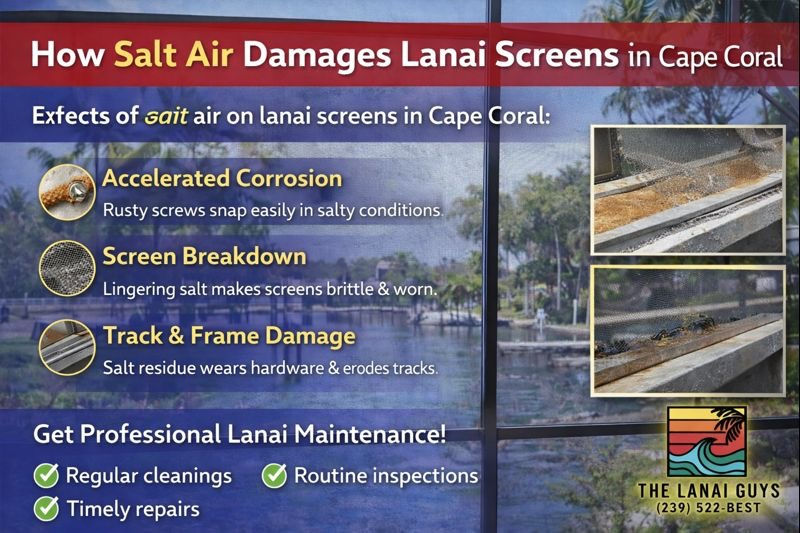


Living in Cape Coral means beautiful waterfront views, coastal breezes, and year-round outdoor living—but it also means your lanai screens are constantly under attack from salt air. If you’ve noticed rusty screws, brittle screens, or panels pulling loose, salt exposure is likely the culprit.
Here’s why salt air is so damaging to lanai screens in Southwest Florida—and what you can do to protect your investment.
How Salt Air Affects Lanai Screens
Salt air doesn’t just sit on surfaces—it penetrates them. When ocean or canal air carries salt particles inland, those particles settle on your lanai screens, frames, fasteners, and tracks. Over time, this causes several common (and costly) problems.
1. Accelerated Corrosion of Screws & Hardware
Salt speeds up oxidation. Even “rust-resistant” fasteners can corrode quickly in coastal environments.
What we see most often:
Rusted screws snapping during repairs
Loose screen panels from failing fasteners
Stained aluminum frames from rust runoff
Once screws rust, they lose holding power—leading to sagging or blown-out screens during storms.
2. Screen Material Breakdown
Salt residue combined with UV exposure dries out screen fibers faster than normal.
This causes screens to:
Become brittle and crunchy
Tear more easily
Lose tension and wrinkle
In Cape Coral, this process can happen years sooner than in inland Florida homes.
3. Track & Frame Damage
Salt buildup inside tracks attracts moisture and debris. This creates friction and wear, especially on roll-down power screens, forcing motors to work harder and shortening their lifespan.
Why Cape Coral Homes Are Hit Harder
Cape Coral is especially vulnerable because:
Many homes are on canals or near open water
Coastal winds push salt farther inland
Screens are used year-round, not seasonally
Even homes miles from the river or Gulf still experience salt exposure over time.
How to Prevent Salt Damage to Your Lanai Screens
The good news? Salt damage is manageable with the right care.
✅ Regular Rinsing
Lightly rinse screens, frames, and tracks with fresh water every 1–2 months to remove salt residue. Avoid pressure washers—they can stretch or tear screen material.
✅ Professional Maintenance
Routine inspections catch rusted fasteners, loose panels, and early screen wear before they become major repairs.
At The Lanai Guys, our maintenance service includes:
Track cleaning
Screen and tension inspection
Fastener checks
Early corrosion detection
✅ Monthly or Bi-Monthly Service Programs
For coastal homes and canal properties, we strongly recommend ongoing service programs. These keep salt buildup under control and dramatically extend the life of your screens.
Monthly service – Ideal for waterfront homes
Bi-monthly service – Great for standard residential properties
✅ Timely Repairs
Waiting too long turns small issues into expensive problems. Replacing a few rusted screws now is far cheaper than rebuilding an entire panel later.
Don’t Let Salt Air Ruin Your Lanai
Salt air damage is unavoidable in Cape Coral—but serious damage is preventable.
If your lanai screens are:
Rusting
Sagging
Tearing
Making noise
Hard to operate
…it’s time to have them serviced.
📞 Call The Lanai Guys today to schedule a lanai screen maintenance appointmentWe proudly serve Cape Coral, Fort Myers, and surrounding Southwest Florida communities and offer monthly and bi-monthly maintenance programs designed for coastal homes.
Protect your outdoor living space now—and save yourself costly repairs later.


Comments